
What to Expect When You Arrive
-
1
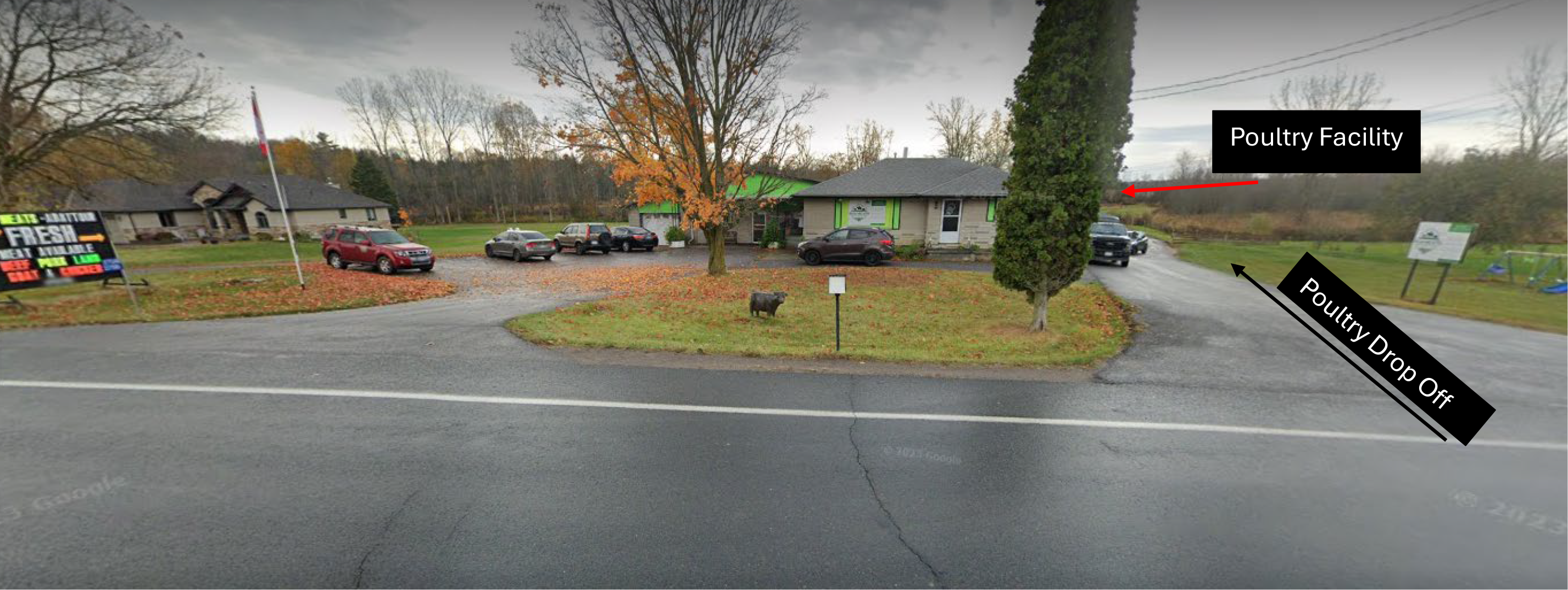
Pull down the driveway along the right/west side of the facility into the parking lot. The traffic cones are there to guide you around the perimeter of the lot.
-
2
You will need to complete a "green card" (see example below), which is provided. An OMAFRA (provincial) inspector will sign off to verify that the birds were alive and well at the time of arrival.
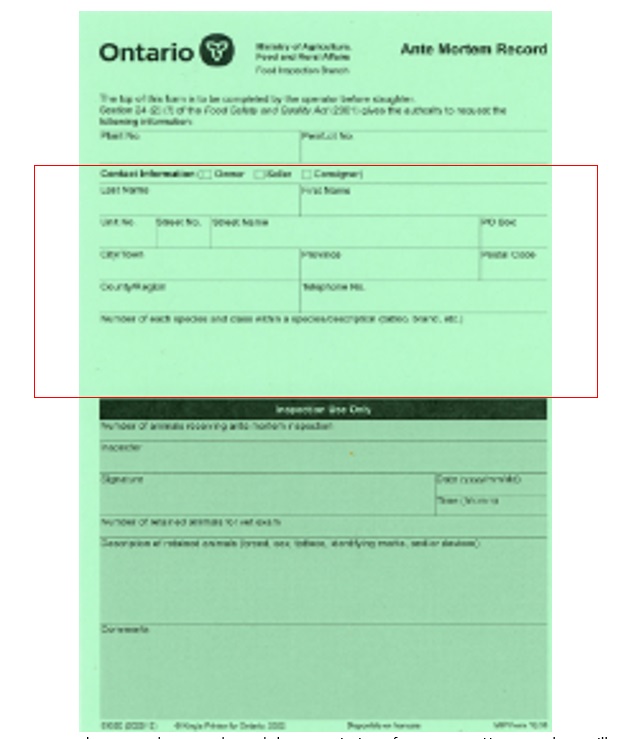 Green Card Example
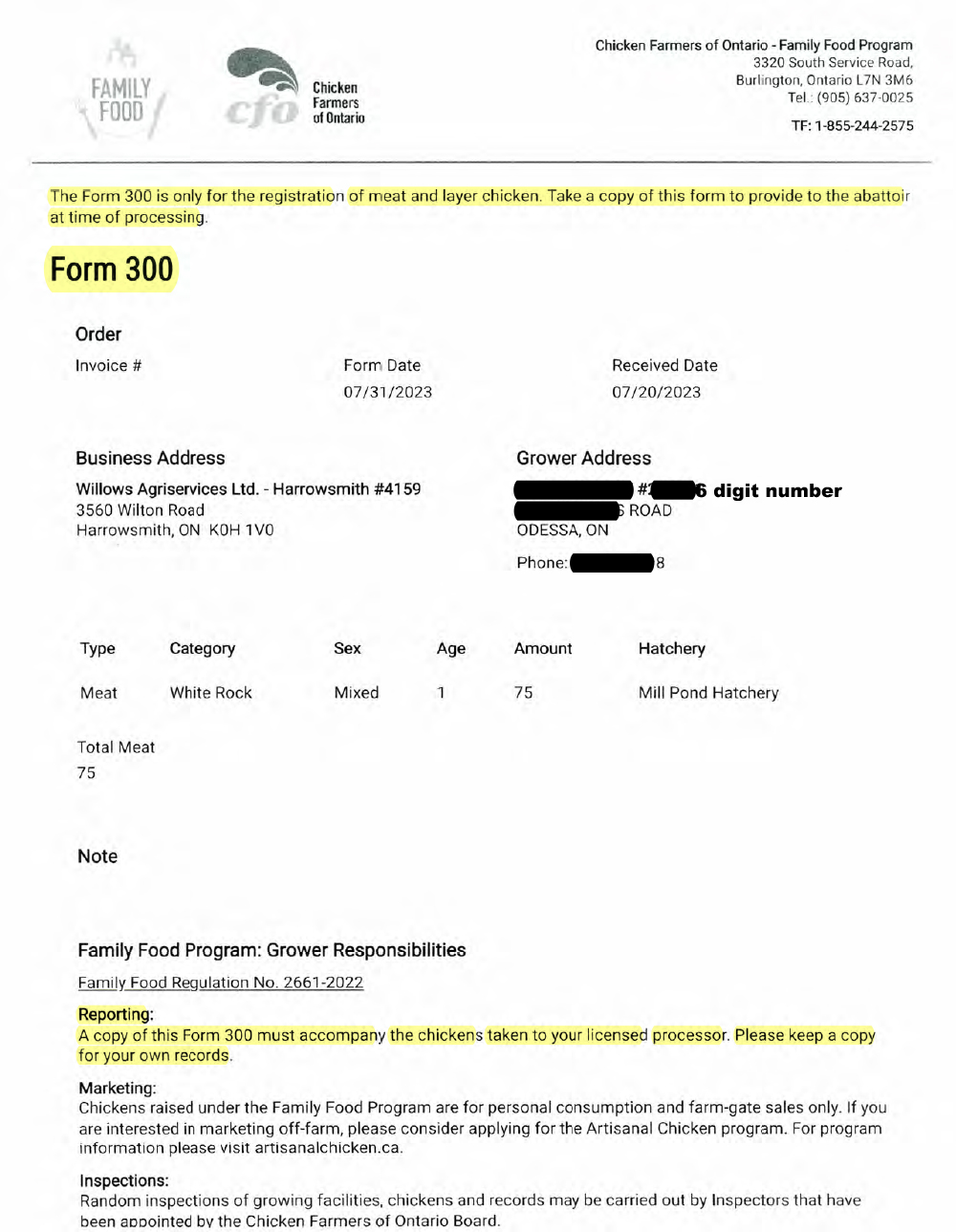 Form 300 Example
- You must fill in your name, address, and phone number.
- Number of birds and species - e.g., 50 White Rock Chickens; 10 Ducks; 20 Turkeys.
- Provide a copy of the Form 300 (for chickens only) along with your grower number. The Form 300 was given to you at the time of or shortly after picking up your chick order from your local feed store. Abattoirs must follow regulations put in place by The Chicken Farmers of Ontario.
-
3
Farmers hang their own birds on the hooks. Be prepared by bringing gloves, boots, and perhaps coveralls to help keep your clothes and truck seats clean. Be prepared to help the farmers ahead of you off-load their birds.
-
4
Please wait for staff to give the signal that the line is ready to accept more birds.
-
5
An inspector will be in the processing room checking the health, safety, and quality of all birds.
-
6
Processing happens on Fridays.
- Fresh market birds are available next day (Saturday).
- Frozen birds are to be picked up on Mondays or a Tuesday following a long weekend.
Feed Withdrawal Guidelines
Important Feed Withdrawal Note
Feed should be removed 8-12 hours before the expected processing time. Feed withdrawal prior to slaughter impacts the processing and carcass quality.
Water should remain available as long as possible. If you are transporting birds loose in a trailer, provide water.
Food should be removed from your birds to minimize the chance of fecal and/or feed contamination of the carcass as the bird is eviscerated. Digestion slows when the birds are without light, so a slightly longer fast time when done overnight may be acceptable.
However, prolonged fasting for extended times can cause damage to the mucosal lining of the intestines. The liver continues to function and produce bile which passes through the small intestine into the gall bladder. As the gall bladder expands, the bladder walls become more fragile, making removal of the gall bladder more difficult - this could cause staining and reduce the quality of the carcass.
During feed withdrawal, the liver acts as a source of energy, which means glucose and fat will be used up over a longer withdrawal period. The liver will shrink and darken as a result.
Humane Transportation Requirements
The humane transportation and treatment of all poultry and livestock coming to Rua Meats must be followed. With that in mind we have added links below to provide guidelines for the safe and humane transportation of poultry and livestock.
- Poultry are sensitive to temperature. They do not thermoregulate well - if they are too warm, they will overheat and potentially die.
- Birds may be transported in cages with appropriate space, or in stock trailers with birds on shavings and water provided. The birds must have adequate space and ventilation.
- Cardboard boxes, Rubbermaid tubs, and grain bags are not good carriers. If this type of carrier is used the tops must be open with added ventilation holes cut into the sides at the level of the birds.
Rua Meats Location
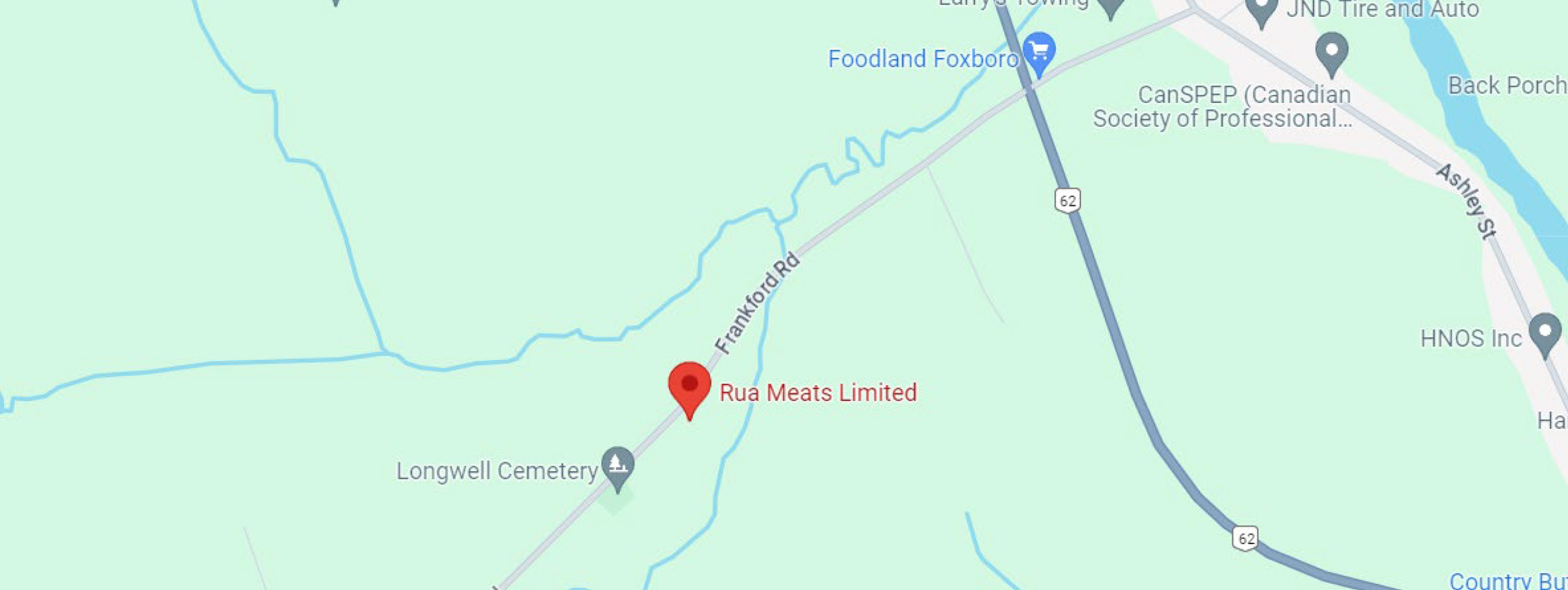
275 Frankford Rd, Foxboro, ON K0K 2B0
Use the maps below or click the address for Google Maps directions.
Chicken Farmers of Ontario Registration
Family Food Program - Form 300 Registration
Farmers who hatch their own broilers can obtain a Family Food Program registration number and Form 300 by contacting Chicken Farmers of Ontario.
- Phone:905-637-0025
- Website:ontariochicken.ca/en/registration